
Cartersville Hedging Services
Choose our expert hedging services for precise, professional care that enhances curb appeal, promotes healthy growth, and creates a polished, inviting outdoor environment tailored to your vision.
Get a Free QuoteOur Cartersville Landscaping & Yard Care Services
When to Schedule Hedging in Cartersville, Georgia – Seasonal Guide
In Cartersville, Georgia, the best times to schedule hedging are typically late winter through early spring and again in late summer. These periods align with the region’s moderate temperatures and reduced risk of frost, which usually ends in mid-March. Hedging during these windows helps promote healthy regrowth and minimizes plant stress, especially in neighborhoods like Waterford and near Dellinger Park, where mature landscapes are common. Cartersville’s climate features humid summers and occasional drought conditions, so timing your hedging to avoid peak heat and dry spells is crucial for maintaining lush, well-shaped hedges.
Local environmental factors such as soil composition—ranging from clay-heavy soils in the Atco area to loamier ground near the Etowah River—can influence how quickly hedges recover after trimming. Shade coverage from large oaks in historic districts, as well as municipal guidelines found on the city’s website, may also affect when and how hedging services are performed. By considering these local nuances, you can ensure your property’s hedges remain healthy and attractive year-round.
Local Factors to Consider for Hedging in Cartersville
- Tree density and shade coverage, especially in established neighborhoods
- Terrain variations, such as sloped yards near Red Top Mountain Road
- Seasonal precipitation patterns and drought risk
- Local frost dates and humidity levels
- Municipal restrictions or guidelines on landscape maintenance
Benefits of Hedging in Cartersville
Enhanced Curb Appeal
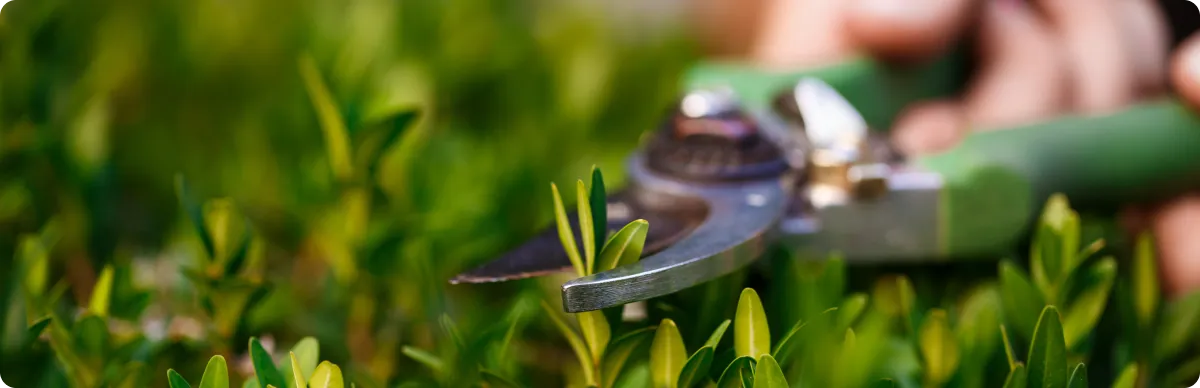
Professional Hedge Shaping
Improved Property Value
Expert Local Knowledge
Reliable Scheduling
Eco-Friendly Practices
Cartersville Hedging Types

Boxwood Hedges
-
Privet Hedges
-
Holly Hedges
-
Yew Hedges
-
Arborvitae Hedges
-
Loropetalum Hedges
-
Wax Myrtle Hedges
Our Hedging Process
Consultation and Planning
Site Preparation
Precision Trimming
Cleanup and Inspection
Why Choose Cartersville Landscape Services
Cartersville Homeowners Trust Us
-
Expert Lawn Maintenance
-
Reliable Scheduling
-
Competitive Pricing
-
Professional Team
-
Satisfaction Guarantee
-
Personalized Service
-
Locally Owned and Operated
Hedge Trimming Timing and Cartersville's Piedmont Growing Season
Cartersville, Georgia, falls within USDA Hardiness Zone 7b, situated in the Ridge and Valley subregion of the southern Appalachian Piedmont. This location produces a long warm season with high summer humidity, typically from late April through October, during which broadleaf and evergreen hedges such as Leyland cypress, boxwood, holly, and ligustrum experience vigorous growth. According to UGA Cooperative Extension, the optimal primary trimming window for most evergreen hedges in this zone is late spring, after new growth has hardened—generally mid-May through early June. A secondary trim in late August to early September allows shape maintenance before fall dormancy. Avoid heavy cuts after mid-September, as new growth stimulated too late in the season may be vulnerable to frost damage during Cartersville's typical first freeze window of late November to early December. Monitoring growth rate rather than calendar date alone produces the most reliable results.
Cartersville's Red Clay Soils and Their Effect on Hedge Root Health
Soils in Cartersville and surrounding Bartow County are predominantly Ultisols of the Piedmont series, including Cecil, Pacolet, and Madison soil series, characterized by dense red clay subsoils with limited drainage capacity. According to the USDA Web Soil Survey, these soils tend toward moderate to strong acidity, with pH values commonly ranging from 5.0 to 6.0. For hedging plants, compacted clay restricts root expansion and can cause waterlogging at the base of shrubs during Cartersville's periodic heavy rainfall events. Practical steps for property owners managing hedges in these conditions include:
- Amending planting beds with organic matter to improve drainage and aeration
- Avoiding deep cultivation within 18 inches of established hedge root zones
- Monitoring for root rot symptoms, particularly in boxwood and arborvitae, which are sensitive to saturated clay
- Consulting UGA Cooperative Extension soil testing services to determine lime and amendment needs before replanting hedge rows
Soil pH correction is especially important before establishing new hedge lines.
Sightline Compliance and Cartersville's Right-of-Way Hedge Standards
Hedges planted along street frontages, driveways, and intersections in Cartersville are subject to visibility and right-of-way standards enforced through the city's zoning and code compliance framework. Overgrown hedges that obstruct driver sightlines at intersections or encroach into public rights-of-way may be cited under local nuisance vegetation provisions. Property owners should be aware of the following practical requirements:
- Hedges adjacent to intersections should generally be maintained below 30 inches in height within the sight triangle, though property owners should confirm exact measurements with the city
- Vegetation must not overhang sidewalks or obstruct pedestrian clearance
- Encroachment into the public right-of-way without authorization may result in code enforcement action
For zoning setback requirements, frontage standards, and right-of-way boundaries applicable to your parcel, contact:
Cartersville Planning & Development
1 Taylor Street, Cartersville, GA 30120
Phone: (770) 387-5600
Official Website: Cartersville Planning & Development
Protecting Euharlee Creek Corridors During Hedge Maintenance in Cartersville
Cartersville's landscape includes several stream corridors, most notably Euharlee Creek and its tributaries, which flow through and adjacent to residential and commercial areas within city limits. Hedge trimming and removal activities near these waterways require attention to erosion control and debris management. Clippings, cut branches, and disturbed soil deposited into or near stream banks can contribute to sedimentation and water quality degradation, which is regulated under the Georgia EPD Watershed Protection Branch and the federal Clean Water Act. Property owners and contractors working near stream buffers should:
- Keep all hedge clippings and debris at least 25 feet from stream banks and drainage channels
- Avoid trimming during or immediately before heavy rainfall events
- Contain and bag clippings before disposal rather than blowing or raking them toward drainage features
For environmental compliance questions related to stormwater and erosion near waterways, Bartow County's environmental oversight is coordinated through:
Bartow County Environmental Management Services
135 West Cherokee Avenue, Cartersville, GA 30120
Phone: (770) 387-5130
Official Website: Bartow County Environmental Management Services
Hedge Debris Disposal and Cartersville Public Works Coordination
Hedge trimming generates significant volumes of woody clippings, branches, and leafy debris that must be managed in compliance with Cartersville's municipal solid waste and yard waste protocols. The Cartersville Public Works Department oversees sanitation and waste collection services for city residents. Property owners should observe the following disposal guidance:
- Yard waste including hedge clippings should be placed in biodegradable paper bags or bundled with twine for curbside collection; confirm current collection days and container limits directly with Public Works
- Loose clippings should not be blown or swept into storm drains, gutters, or street surfaces, as this contributes to stormwater blockage and water quality violations
- Large volumes of woody hedge material from major renovation projects may require separate haul-away arrangements or drop-off at an approved facility
- Verify current collection schedules, acceptable container sizes, and any seasonal changes with the department before scheduling large-scale hedge work
Cartersville Public Works Department
200 Cassville Road, Cartersville, GA 30120
Phone: (770) 387-5640
Official Website: Cartersville Public Works Department
What Neighborhoods Do We Serve Throughout Cartersville, GA?
Hedging services are provided across Cartersville's diverse residential and mixed-use neighborhoods, each presenting distinct site conditions and maintenance considerations:
- Downtown Cartersville Historic District: Older lots with established broadleaf hedges, narrow frontages, and proximity to sidewalks requiring careful sightline and right-of-way compliance during trimming.
- Douthit Ferry Road Corridor: Larger residential parcels with mixed evergreen and deciduous hedge rows, often adjacent to drainage swales and low-lying areas prone to clay saturation after heavy rain.
- Woodland Hills: Established subdivision with mature Leyland cypress and holly hedges; dense tree canopy creates shade pressure that affects hedge density and growth rate.
- Cartersville Country Club Area: Larger lots with formal hedge plantings along property lines; HOA-influenced maintenance standards and frontage upkeep expectations are common in this area.
- Cassville Road Neighborhoods: Mixed residential development with varying lot ages; newer fill soils in some sections may affect drainage and root establishment for hedge plantings.
- Euharlee Road Residential Areas: Properties near Euharlee Creek tributaries require particular attention to debris containment and buffer compliance during hedge trimming and removal work.
- Grassdale Road Subdivisions: Newer residential development with younger hedge plantings on compacted construction fill; soil amendment and proper trimming timing are especially important for long-term hedge health in this area.