
Cartersville Weeding Services
Choose our expert weeding services for a healthier, more vibrant landscape—our experienced team ensures your garden stays weed-free, letting your plants thrive and your yard look its best all season long.
Get a Free QuoteOur Cartersville Landscaping & Yard Care Services
When to Schedule Weeding in Cartersville, Georgia – Seasonal Guide
In Cartersville, Georgia, the best times to schedule weeding are closely tied to our region’s unique climate and landscape. Early spring, just after the last frost date, is ideal for tackling weeds before they become established. This timing is especially important in neighborhoods like Cassville and near Dellinger Park, where shaded lawns and rich, loamy soils can encourage rapid weed growth. Late summer and early fall are also strategic periods, as the combination of high humidity and occasional drought can stress turf and make it more susceptible to invasive species.
Local environmental factors play a significant role in determining the optimal weeding schedule. For example, properties near the Etowah River may experience higher soil moisture, while those in the hills around Red Top Mountain State Park often contend with rocky terrain and variable shade coverage. Homeowners should also be aware of municipal guidelines and seasonal restrictions, which can be found on the official city website, to ensure compliance with local ordinances.
Local Factors to Consider for Weeding in Cartersville
- Proximity to water sources like the Etowah River
- Tree density and shade coverage in neighborhoods such as Cassville
- Soil type (loamy, clay, or rocky)
- Seasonal precipitation and drought risk
- Frost dates and temperature fluctuations
- Municipal restrictions or guidelines on landscaping activities
Benefits of Weeding in Cartersville
Enhanced Curb Appeal
Healthier Plant Growth
Reduced Pest Infestation
Improved Soil Quality
Professional and Reliable Service
Time and Effort Savings
Cartersville Weeding Types

Hand Weeding
-
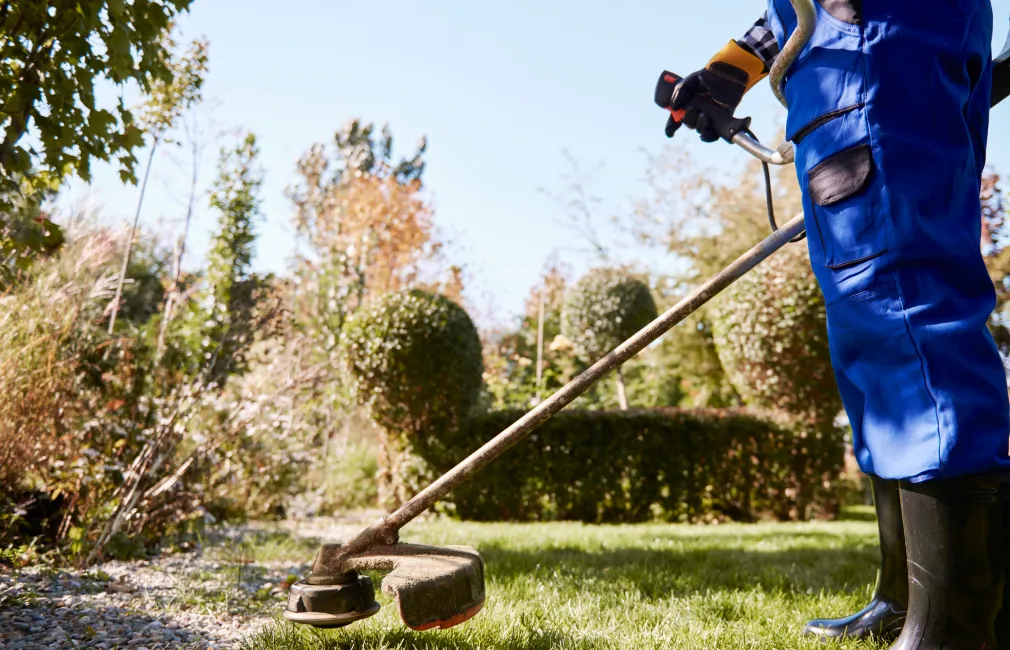
Mechanical Weeding
-
Mulching for Weed Control
-
Pre-Emergent Herbicide Application
-
Post-Emergent Herbicide Application
-
Flame Weeding
-
Organic Weed Management
Our Weeding Process
Site Evaluation
Weed Identification
Targeted Removal
Soil Treatment
Final Inspection
Why Choose Cartersville Landscape Services
Cartersville Homeowners Trust Us
-
Expert Lawn Maintenance
-
Reliable Scheduling
-
Competitive Pricing
-
Professional Team
-
Satisfaction Guarantee
-
Personalized Service
-
Locally Owned and Operated
Cartersville's Piedmont Red Clay Soils and Weed Establishment Patterns
Cartersville sits within Georgia's Piedmont physiographic region, where soils are predominantly Ultisols — specifically Cecil and Appling series red clay loams with pH levels typically ranging from 5.5 to 6.2. These compacted, poorly draining soils create conditions that favor opportunistic weed species such as common chickweed (Stellaria media), wild violet (Viola sororia), and nutsedge (Cyperus spp.), which exploit compacted surface layers and low-oxygen root zones. According to the USDA Web Soil Survey, Bartow County soils exhibit moderate to high clay content, limiting water infiltration and encouraging surface weed colonization after rainfall events. Effective weeding in Cartersville must account for:
- Root extraction depth in compacted clay (often 6–10 inches for tap-rooted species)
- Soil moisture timing — weeding is most effective 24–48 hours after rainfall when clay softens
- Avoidance of soil disturbance that accelerates erosion on sloped lots
- pH testing before herbicide or soil amendment applications
UGA Cooperative Extension provides soil testing guidance specific to Piedmont Georgia conditions.
Seasonal Weed Pressure Timing in Cartersville's USDA Zone 7b Climate
Cartersville falls within USDA Plant Hardiness Zone 7b, with average minimum winter temperatures between 5°F and 10°F. This zone supports a long warm-season growth window — typically March through November — during which weed pressure is sustained and often intense. Property owners and managers should plan weeding interventions around two primary flush periods:
- Spring flush (March–May): Cool-season weeds such as henbit (Lamium amplexicaule), hairy bittercress (Cardamine hirsuta), and annual bluegrass (Poa annua) peak before soil temperatures exceed 65°F
- Summer flush (June–September): Warm-season weeds including crabgrass (Digitaria spp.), spurge (Euphorbia spp.), and nutsedge dominate during peak heat and humidity
- Fall window (October–November): A secondary cool-season germination period requires attention before winter dormancy
The National Weather Service Peachtree City forecast office serves the Cartersville area and provides seasonal precipitation data useful for anticipating weed germination cycles. Weeding intervals of every 3–4 weeks during active growth periods are generally appropriate for maintained beds and turf edges in this climate zone.
Protecting Euharlee Creek and Cartersville Stormwater Infrastructure During Weed Control
Cartersville's drainage network includes Euharlee Creek, Pettit Creek, and numerous stormwater conveyance features managed in part by the Cartersville Public Works Department. Weed control activities — particularly those involving herbicide applications — must be conducted with care to prevent chemical runoff into these waterways. The Georgia EPD Watershed Protection Branch establishes water quality standards applicable to stormwater discharges, and the Clean Water Act prohibits the introduction of pollutants into waters of the United States. Practical precautions for weeding near drainage features include:
- Maintain a minimum 10-foot hand-weeding buffer from creek banks and stormwater inlets before any chemical application
- Avoid herbicide application within 24 hours of forecast rainfall events
- Do not dispose of pulled weeds or organic debris into drainage ditches, storm drains, or creek corridors
- Bag and contain all removed weed material before transport or disposal
Cartersville Public Works Department
10 N. Erwin St., Cartersville, GA 30120
Phone: (770) 387-5640
Official Website: Cartersville Public Works Department
Georgia Pesticide Licensing Requirements for Professional Weed Control in Cartersville
When weeding services in Cartersville involve the application of herbicides — whether pre-emergent or post-emergent — Georgia law requires that applicators hold appropriate licensure under the Georgia Pesticide Use and Application Act of 1976. The Georgia Department of Agriculture – Licensing, Certification and Employee Registration administers pesticide applicator licensing for commercial operators. Property owners hiring professional weeding services should verify that any contractor applying chemical controls holds a valid Georgia pesticide license. Key compliance points include:
- Commercial herbicide applicators must hold a valid Georgia Pesticide Applicator License in the appropriate category (e.g., ornamental and turf)
- Label instructions are legally binding under Georgia and federal law — no herbicide may be applied in a manner inconsistent with its label
- Restricted-use pesticides require a licensed applicator; general-use products may be applied by unlicensed individuals following label directions
- Records of commercial pesticide applications must be maintained per Georgia Department of Agriculture requirements
Bartow County Environmental Management Services also provides oversight of environmental compliance matters at the county level.
Bartow County Environmental Management Services
135 W. Cherokee Ave., Cartersville, GA 30120
Official Website: Bartow County Environmental Management Services
Nuisance Vegetation, Code Compliance, and Cartersville Planning & Development Oversight
Cartersville's municipal code addresses nuisance vegetation on private and commercial properties, with enforcement coordinated through Cartersville Planning & Development. Overgrown weeds and unmaintained vegetation on developed lots can trigger code enforcement action, particularly when growth exceeds thresholds that affect neighboring properties, obstruct sightlines, or create conditions conducive to pest harborage. Property owners and managers should be aware of the following:
- Vegetation on developed lots that is allowed to grow excessively tall or spread onto adjacent rights-of-way may constitute a code violation
- Vacant lots and commercial properties are subject to the same nuisance vegetation standards as residential parcels
- Invasive species such as kudzu (Pueraria montana), Japanese honeysuckle (Lonicera japonica), and privet (Ligustrum spp.) — documented throughout Bartow County by UGA Extension – Invasive Species — may require more aggressive management to prevent spread to adjacent properties
- Confirm current vegetation height thresholds and enforcement procedures directly with the Planning & Development office, as specific ordinance provisions may be updated periodically
Cartersville Planning & Development
1 N. Erwin St., Cartersville, GA 30120
Phone: (770) 387-5600
Official Website: Cartersville Planning & Development
What Neighborhoods Do We Serve Throughout Cartersville, GA?
Weeding services are provided across Cartersville's diverse residential and mixed-use neighborhoods, each presenting distinct soil, drainage, and vegetation management conditions:
- Downtown Cartersville / Historic District: Older established lots with compacted red clay soils, mature tree canopy, and dense shade that encourages moss, wild violet, and cool-season weed pressure in ornamental beds.
- Douthit Ferry Road Corridor: Newer residential subdivisions with disturbed fill soils and active warm-season weed colonization, particularly crabgrass and spurge in turf edges and planting beds.
- Cassville Road Area: Mixed residential and commercial properties with variable drainage, where nutsedge and broadleaf weeds are common in low-lying areas following summer rainfall events.
- Euharlee Road / Pettit Creek Vicinity: Properties near creek corridors require careful weed management to prevent invasive species spread and chemical runoff into sensitive drainage areas.
- Woodland Hills and Surrounding Subdivisions: Wooded lot edges create persistent pressure from privet, honeysuckle, and bramble species that require regular mechanical removal.
- Kingston Highway Corridor: Commercial and transitional-use properties along this corridor frequently require frontage and right-of-way weed management consistent with city code standards.